Jefferson City Spray Foam Insulation: Spray Foam Insulation Services in Jefferson City, Missouri

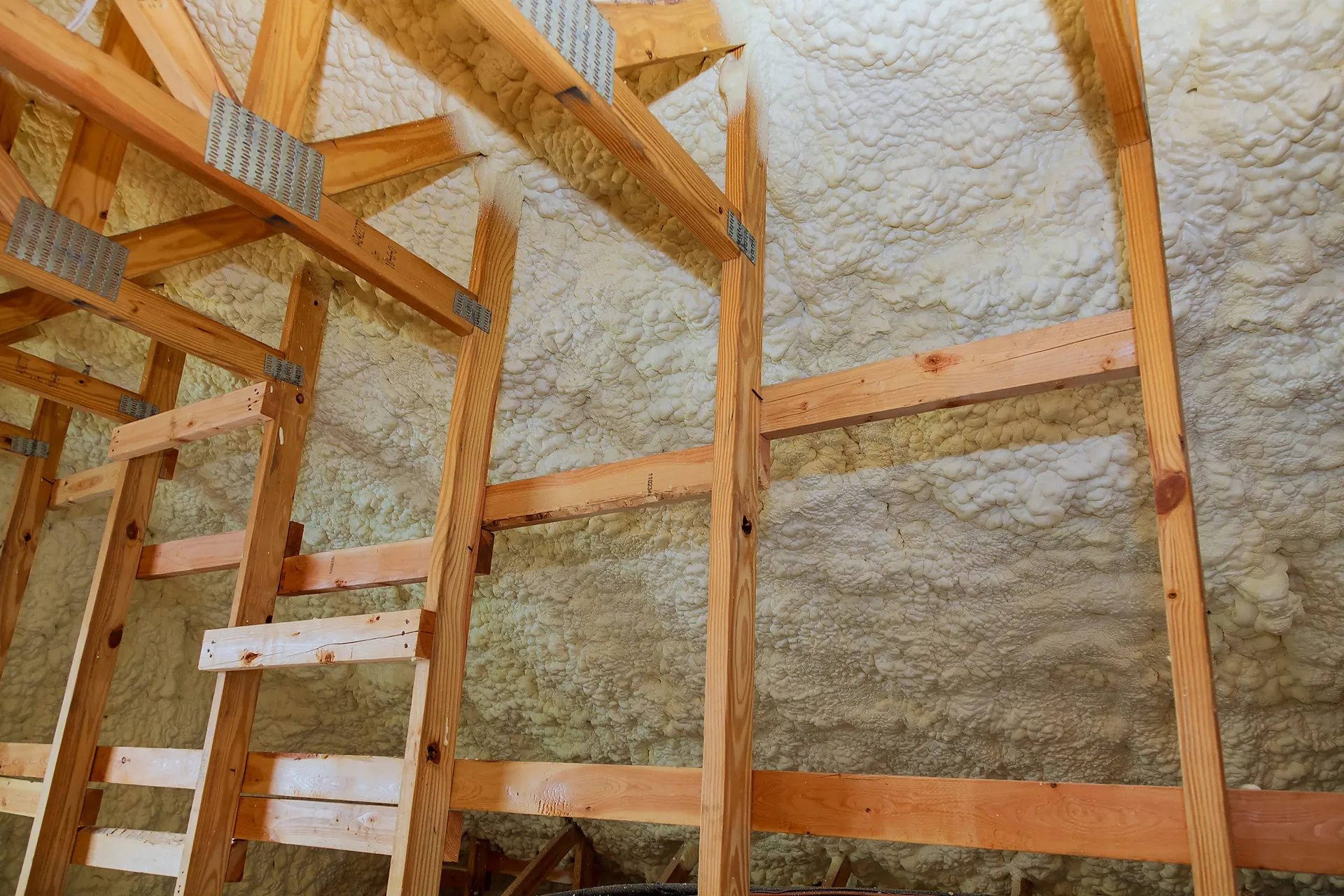
Jefferson City Spray Foam Insulation is a spray foam insulation contractor that has more than 15 years of experience installing closed-cell, open-cell and hybrid spray foam insulation in Jefferson City, Missouri. We handle residential and commercial work for new construction, metal buildings, barndominiums and pole barns. We also insulate whole homes, including attics, walls, basements, crawl spaces and roof decks.

The same crews handle crawl space encapsulation, insulation removal and air sealing across the building envelope. We also install conventional materials, including blown-in insulation, cellulose, fiberglass and mineral wool. We are insured, provide free estimates and offer financing on qualifying jobs.

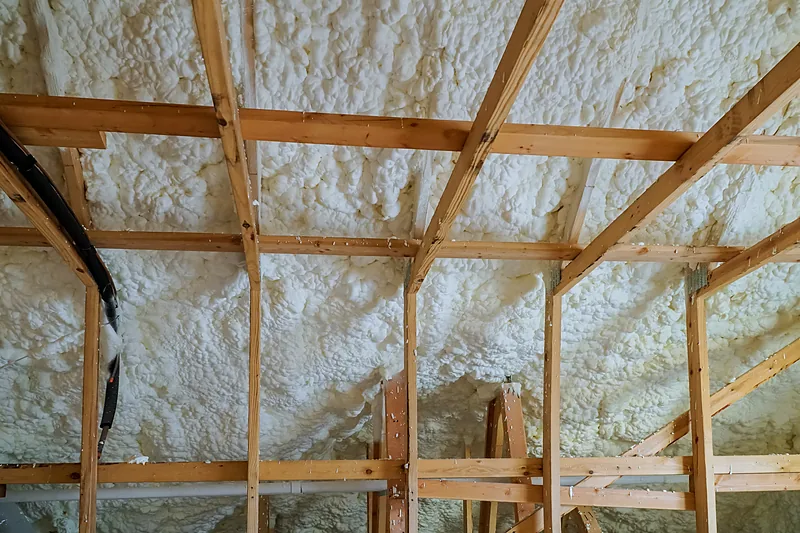
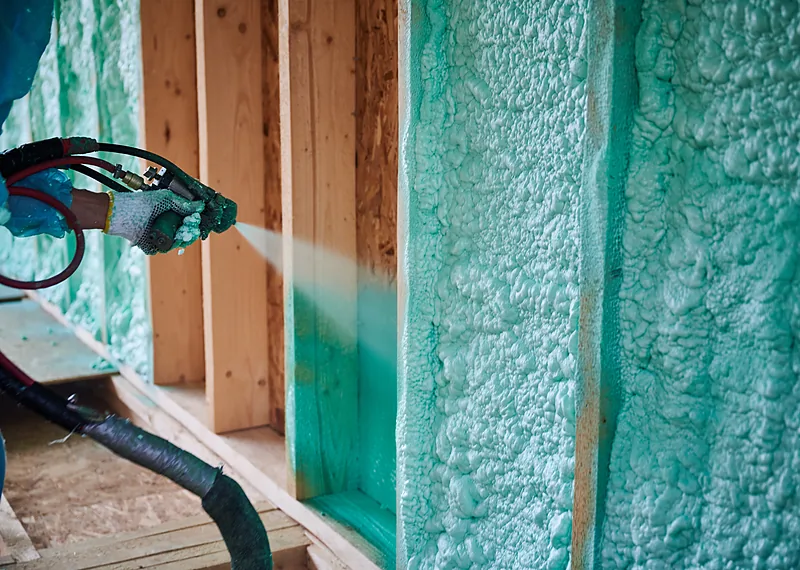
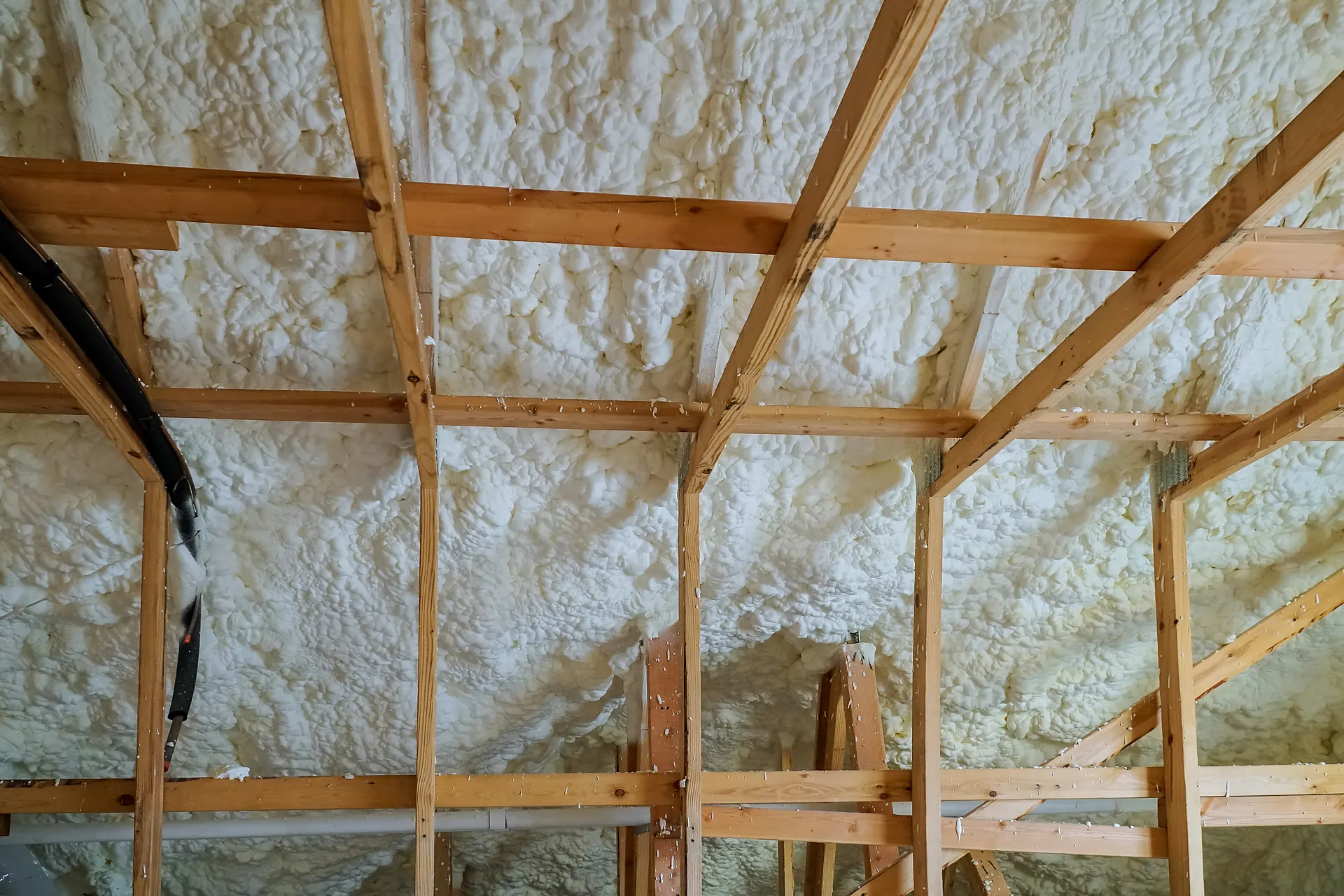
Spray polyurethane foam (SPF) starts as two liquids that expand and harden on contact. While the crew sprays, our proportioner rig monitors the ratio to keep both chemicals in balance. Before spraying, we check the moisture in the framing against the manufacturer's application limit. We also work to the IECC, the model energy code that cities adopt.

We serve Holts Summit, Wardsville and Ashland and complete projects throughout Cole, Callaway and the surrounding Mid-Missouri counties. For every project, Jefferson City Spray Foam Insulation specifies the assembly for the building in front of us. We match the material, thickness and surface preparation to its use, from damp crawl spaces to steel shop walls. The structure itself determines the scope you receive, down to details a generic insulation package would miss.

Get in touch today for a free estimate.

Get A Free Estimate

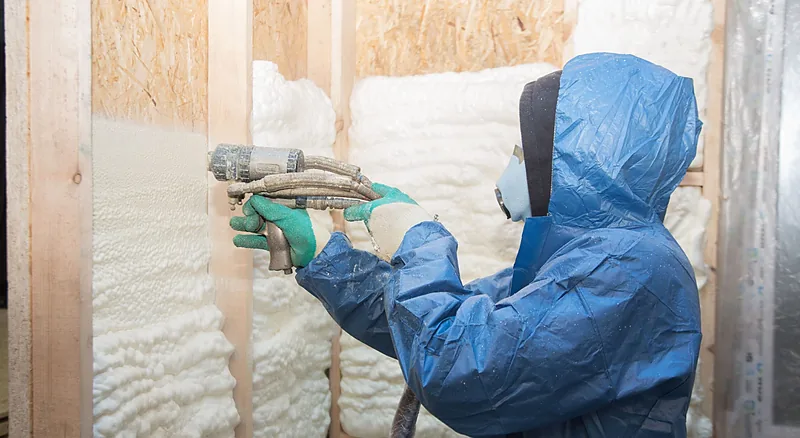
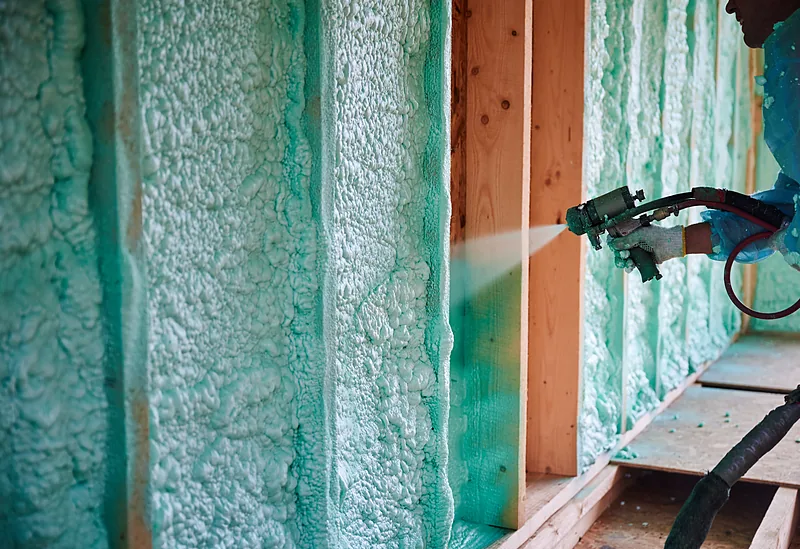
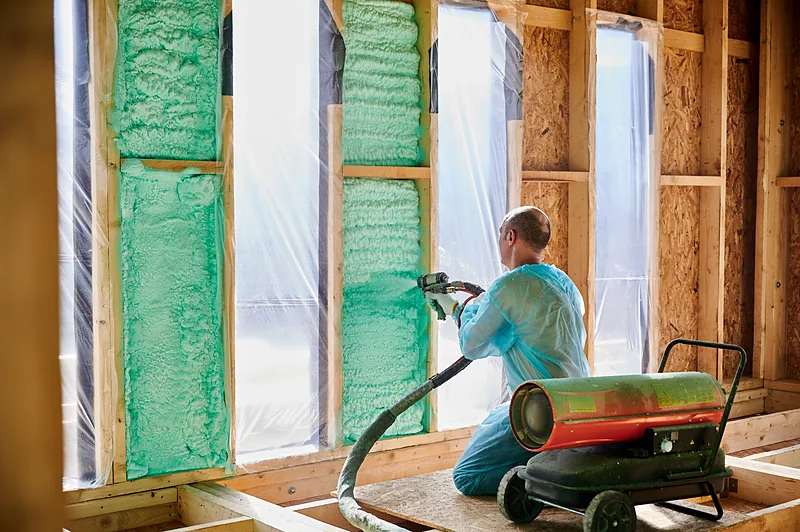
Insulation contractor spraying foam

Why Choose Jefferson City Spray Foam Insulation

  • Jefferson City Spray Foam Insulation is an insured spray foam insulation company that has installed both foam and conventional insulation for 15+ years.
  • Off-ratio foam, with its two chemicals out of balance, will not cure properly. Our crews monitor the proportioner’s ratio and temperature readouts at the rig and stop it at the gun.
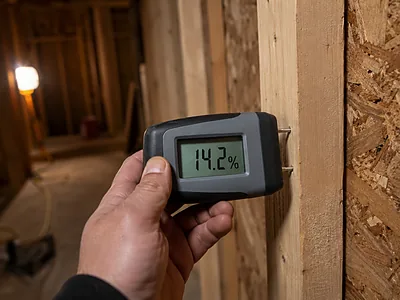
  • Our crews use a pin-type moisture meter to check the framing and confirm that the wood is within the manufacturer’s moisture limit before application.
  • Crews keep the air barrier continuous at rim joists, top plates and utility penetrations.
  • We follow code provisions for thermal and ignition barriers and install intumescent fire-protective coatings where the foam’s fire-test listing qualifies them.
  • You receive the ventilation plan and the required re-entry window, the time the home must stay empty while the foam cures, before the scheduled spray date.
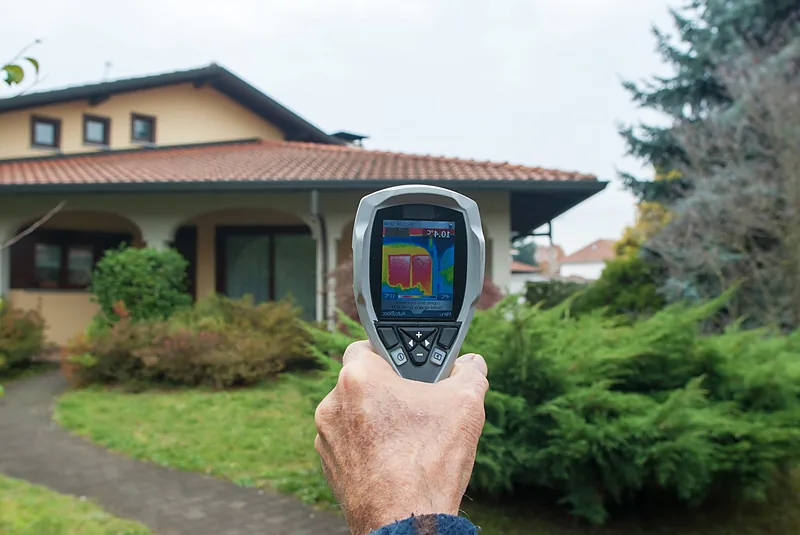
  • Our full insulation menu lets us recommend fiberglass, cellulose or mineral wool when foam does not suit the assembly.
  • We use a depth gauge and keep per-area records of installed coverage for inspectors, utility programs and your project file.
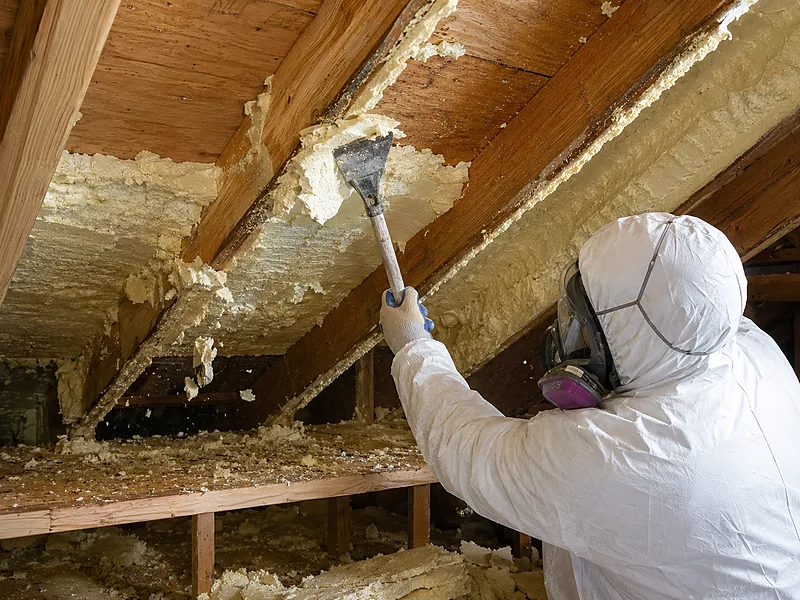
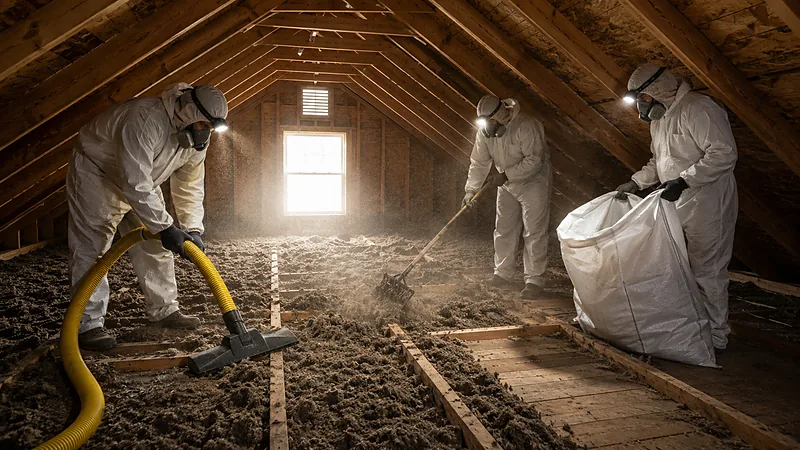
  • We remove damaged material with vacuum extraction, and we remediate failed spray foam from earlier installs.

Where Spray Foam Works Best

Gaps around difficult shapes can interrupt the continuous insulation and air barrier your building needs. Spray foam earns its place where both have to form one layer. Our spray foam insulation services target spots where sheets and batts struggle to stay continuous.

  • Rim joists and band boards: These are two names for the band of framing that caps the foundation walls where the floor structure meets the outdoors. Every bay is a slightly different size, which defeats pre-cut batts; foam fits each one.
  • Roof decks: Rafters, hips and pitch changes prevent sheet insulation from sealing tightly, while foam follows each change in shape.
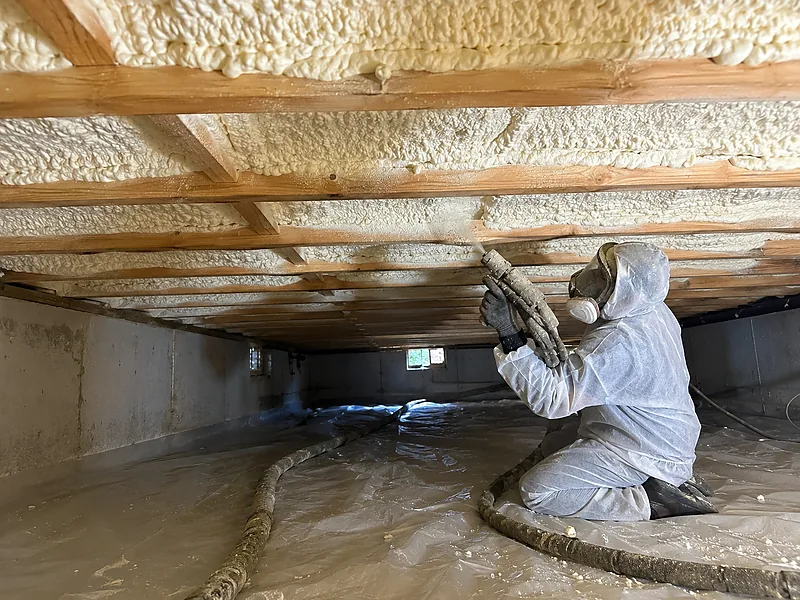
  • Crawl spaces: In low-clearance crawl spaces, foam covers odd geometry and cuts the damp air entering through joints and vents.
  • Metal walls and roofs: Batts and blanket insulation pin poorly to steel; foam adheres to the metal and insulates it in one pass.
  • Penetrations and transitions: Leaks tend to concentrate around pipes, wiring and framing changes, so foam closes the gaps in those areas.
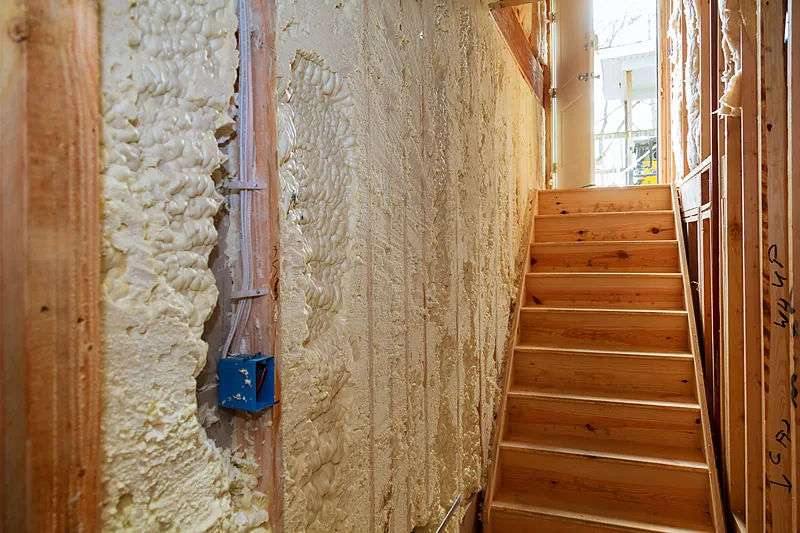
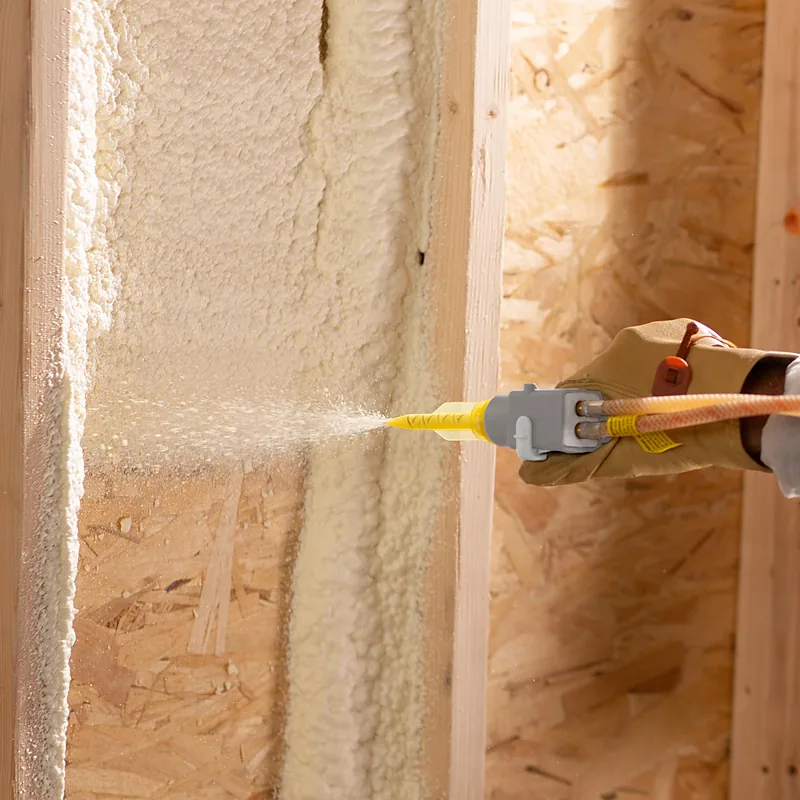
Foam insulation in a framed wall assembly

Insulation Problems We Solve

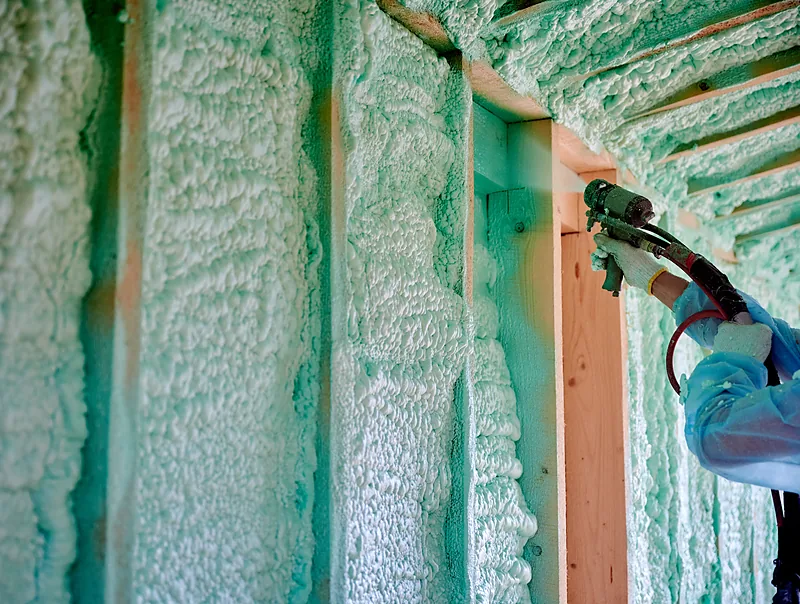
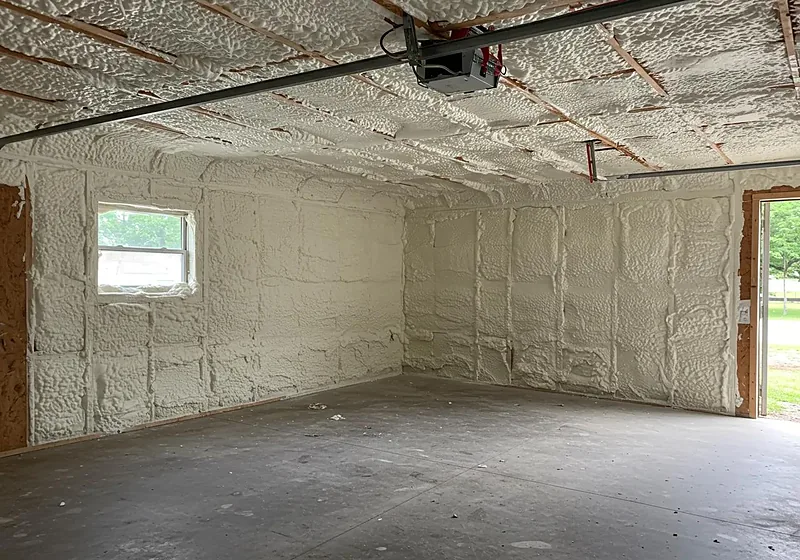
Spraying foam into wall bays beside a framed window opening

Drafts and Air Leaks

Air felt around outlets, baseboards or stair trim usually follows gaps where wiring, pipes or framing penetrate the building envelope. Air sealing closes those leak paths before anything gets insulated. We use blower-door testing, in which a doorway fan pressurizes the house and reveals where air escapes, to trace and close the paths so the insulation that follows performs at its rated value.

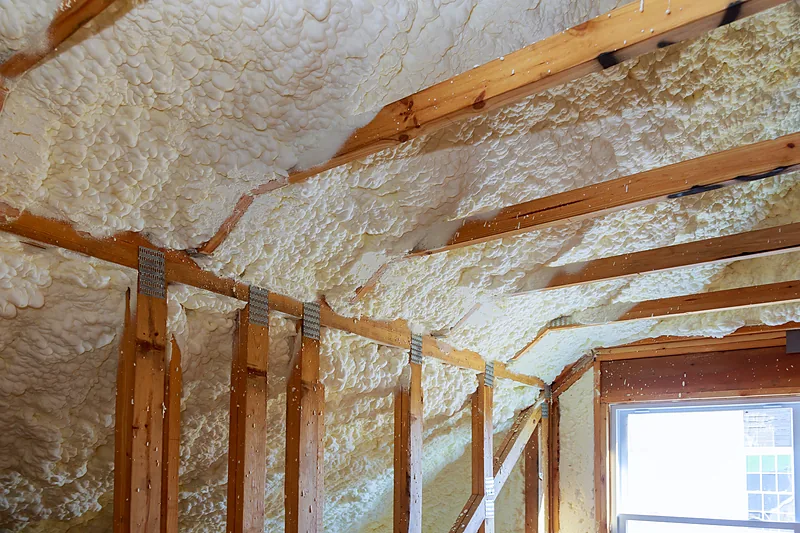
Attic bonus room insulated with open-cell spray foam

Hot and Cold Rooms

When one bedroom ignores the thermostat, the problem often lies in a kneewall, the short wall between the room and attic, a bonus-room floor or an end wall. Because these assemblies border unconditioned space on more sides, they gain and lose heat faster. We air-seal and insulate the weak boundary as one continuous surface.

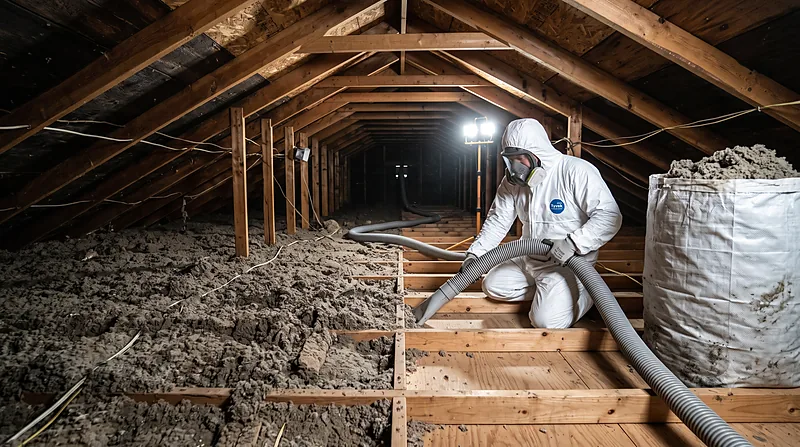
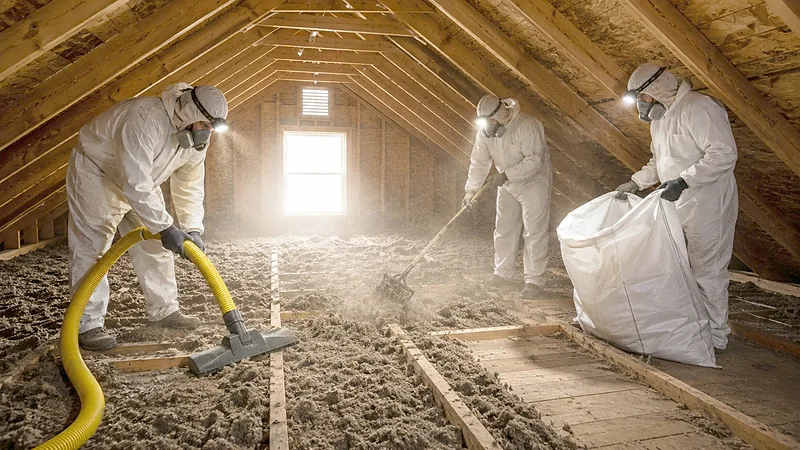
Removing thin, settled insulation from an attic

Poorly Insulated Attics

Rising bills, ice building at the eaves and a second floor that bakes in summer can all point to weak attic coverage. We measure the existing insulation depth, seal the penetrations through the attic floor and restore the full code-required coverage using spray foam or blown-in insulation.

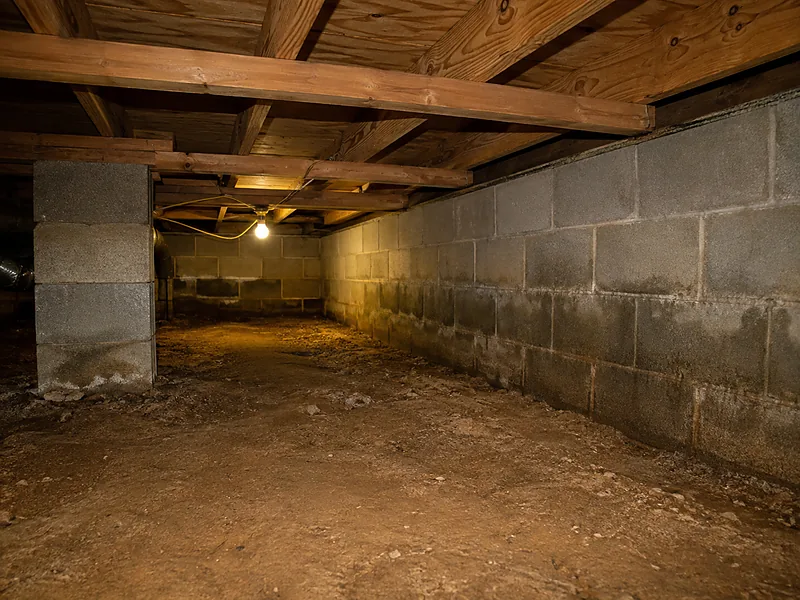
Uninsulated crawl space with dirt floor and block walls

Uninsulated Crawl Spaces

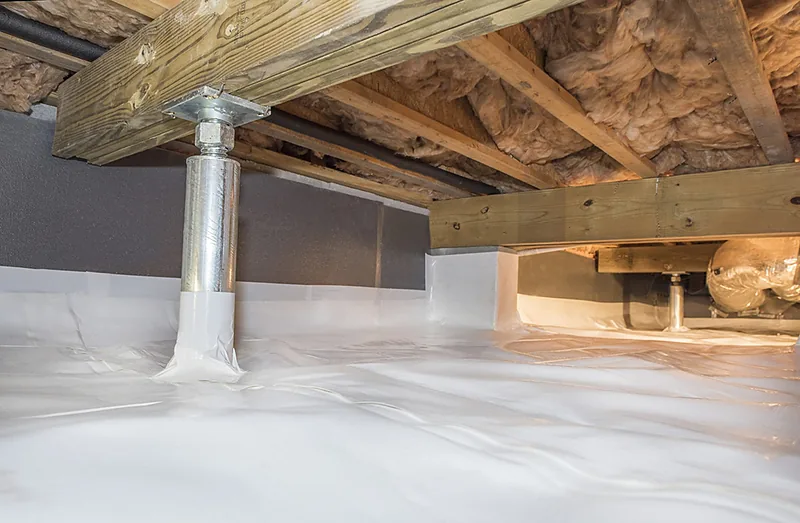
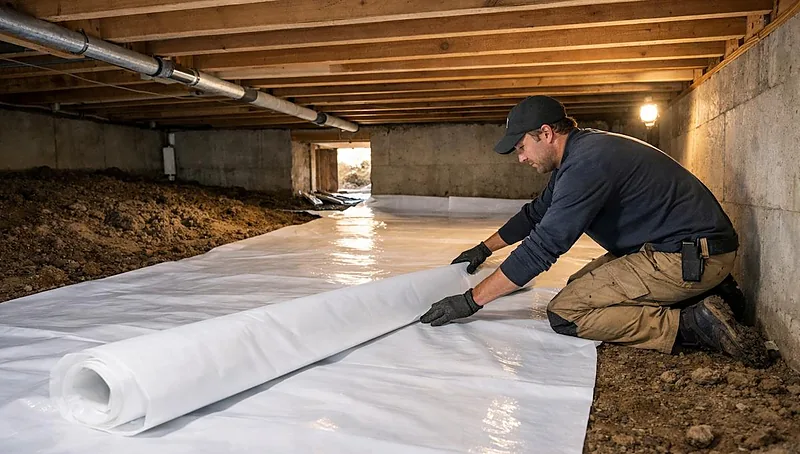
Musty odors and humid first-floor air often follow the path that air takes from the crawl space into the living space. Crawl wall foam and encapsulation close that path. We apply closed-cell foam to the perimeter walls and install a sealed ground liner to cut the moisture at its source, so the floors feel warmer and the musty smell fades.

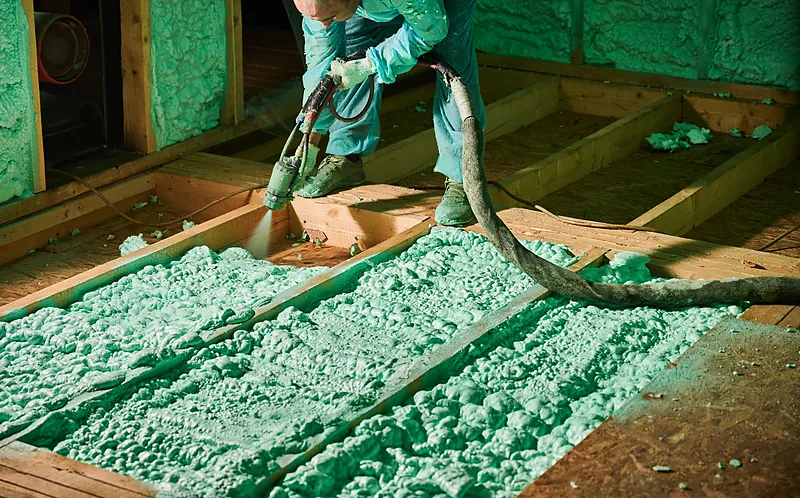
Filling floor joist bays with expanding spray foam

Cold Floors

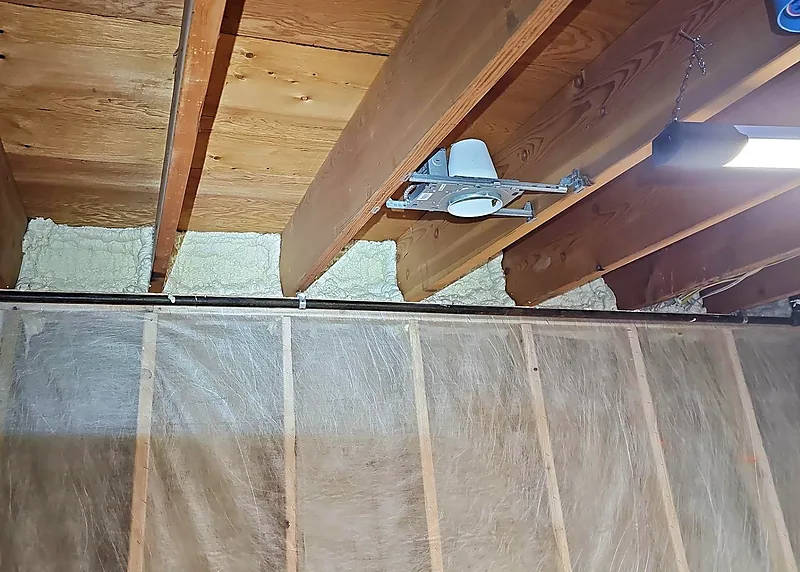
Cold floor edges in winter usually trace to the rim bays, basement or crawl space below the floor. The rim joist is usually the worst offender because gaps there let cold air reach the floor structure. A closed-cell coat across the rim joist bays closes the gap.

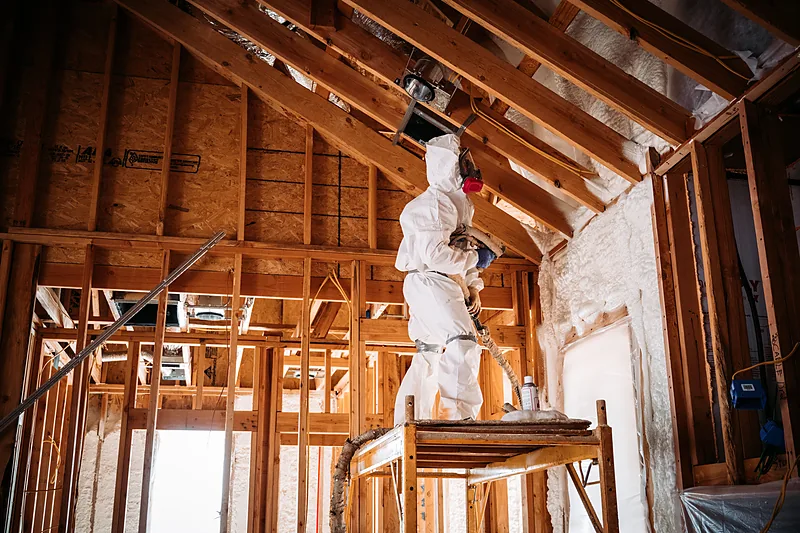
Spraying foam on a vaulted ceiling from a scaffold

Hard-to-Insulate Cavities

Vaults, angles and old framing rarely match standard insulation sizes, but odd shapes still need full coverage. Foam fills irregular spaces while they are open, and dense-pack fills closed walls. Foam expands to the shape it is sprayed into, while dense-pack enters closed cavities through small, patchable openings, leaving an odd assembly as fully covered as a standard one.

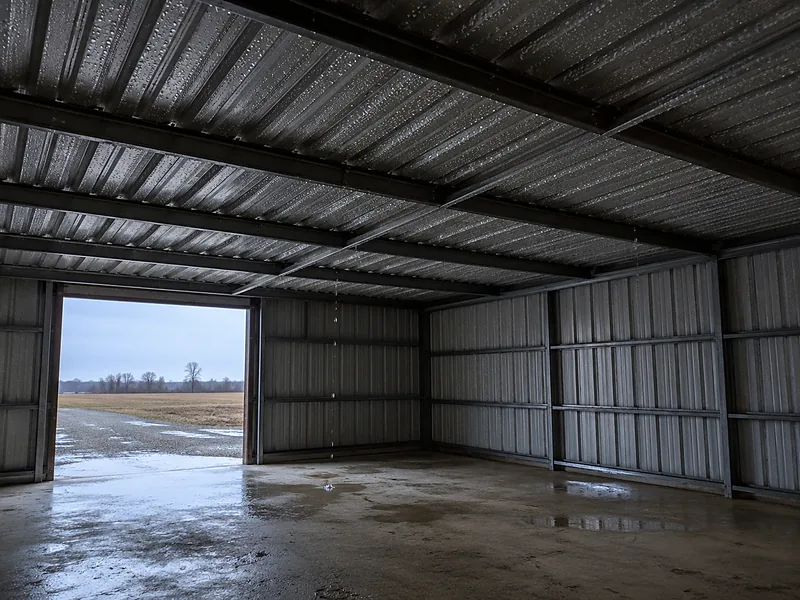
Condensation dripping from an uninsulated metal building roof

Metal Building Condensation

Sweating panels, rusty tools and damp inventory often point to condensation forming on uninsulated metal walls or roof panels. Applying closed-cell foam directly to the panels stops the dripping, so your tools, equipment and inventory stay dry.

Settled attic insulation needing removal

Aging or Damaged Insulation

Settled fill, stained batts or rodent debris need to come out before anything new goes in. Insulation removal and replacement clears out the old material, so your new insulation goes into clean cavities that are ready for it.

Sealing new-construction stud bays with spray foam

Air Leakage in New Builds

A missed blower-door target means too much air is leaking through the building envelope. New-construction air sealing focuses on the framing transitions and penetrations where those leaks occur. We seal the leak paths inside the rough-in window and document the result with before-and-after CFM50 readings, which measure airflow at a standard test pressure.

Spray Foam Insulation Types We Install: Closed-Cell, Open-Cell and Hybrid

The right foam for your project depends on where it will go and the conditions it must handle. We specify polyurethane foam insulation according to the assembly, expected moisture exposure, cavity depth and budget. Closed-cell spray foam, open-cell spray foam and a flash-and-batt (hybrid) assembly each handle moisture differently, so the building conditions guide the choice.

Closed-cell spray foam application

Closed-Cell Foam

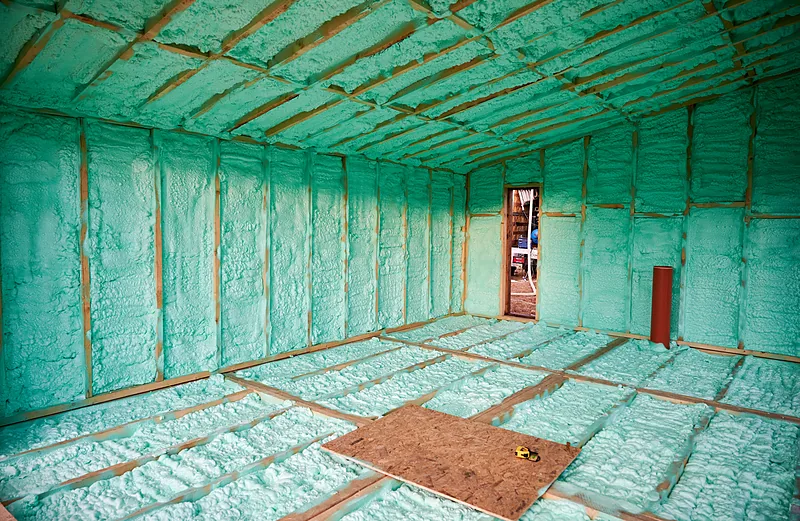
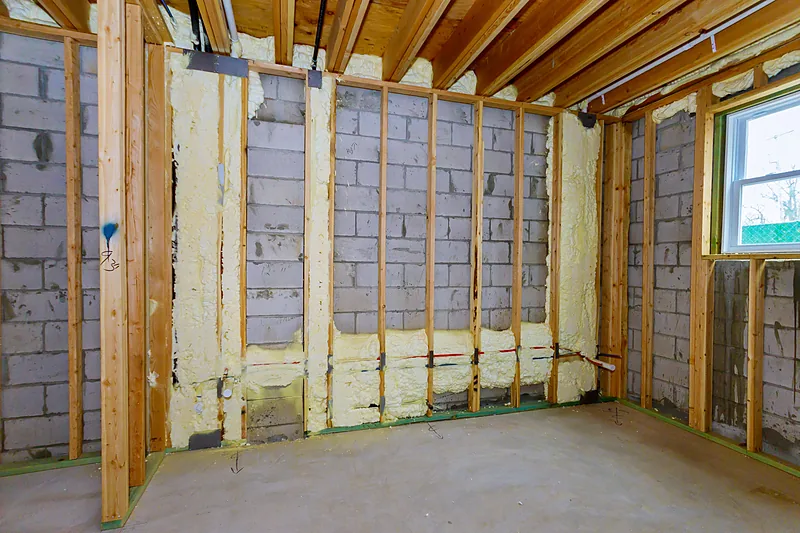
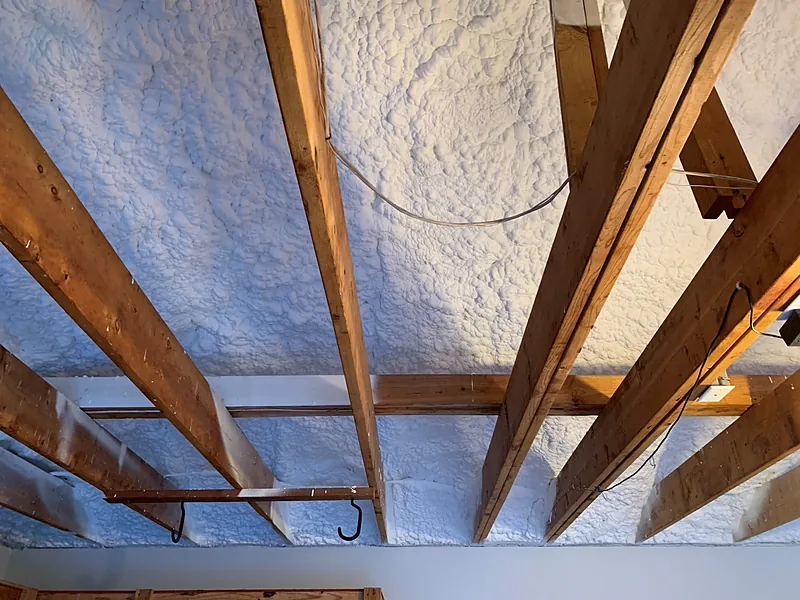
Tight cavities and moisture-prone assemblies are where closed-cell foam does its best work, providing strong thermal resistance in a thinner, water-resistant layer. Closed-cell SPF forms a dense, rigid layer whose cells resist air and bulk water. We use closed cell spray foam on foundation and basement walls, crawl spaces and rim joists, along with metal buildings and exterior assemblies. R-value measures resistance to heat flow, and a higher number means slower heat flow. Closed-cell packs more R-value into each inch, so it helps where space is limited. At a suitable thickness, the foam also slows water vapor moving through the wall, acting as a vapor retarder. It stiffens framing and metal panels against side-to-side movement, adding racking strength.

A pass sprayed too thick can overheat as it cures, scorch the core or leave a lingering odor. We build closed-cell foam up in controlled lifts, allowing cooling time between passes and following the manufacturer's lift-thickness limits.

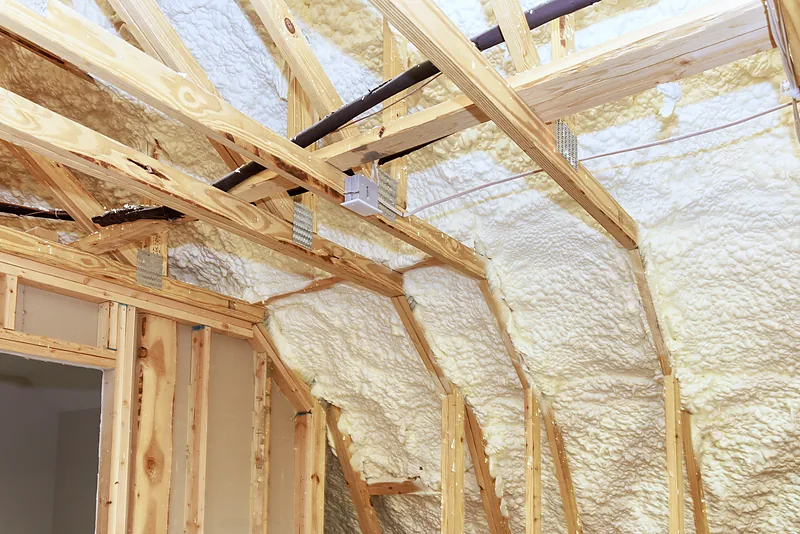
Open-cell spray foam in a roof deck

Open-Cell Foam

Deep or irregular cavities need insulation that can fill the available space while allowing a properly designed assembly to dry. Open-cell SPF has a softer structure that remains vapor-open, and its expansion wraps around wiring, pipes and uneven framing in roof decks, attics, interior walls and above-grade walls. Its lower material density makes open cell spray foam economical for deep cavities. When used as sound insulation foam in interior partitions and floor systems, it dampens the airborne noise that carries between bedrooms, offices and living areas. Because open cells can absorb liquid moisture, we keep the foam away from basement walls, crawl-space floors and other bulk-water exposures.

Fiberglass batt being installed over a closed-cell flash coat in a flash-and-batt wall assembly

Hybrid Foam Assemblies

Budget-sensitive new construction and deep framing cavities can benefit from pairing a closed-cell air seal with a less costly cavity fill. In a flash-and-batt assembly, we apply a closed-cell flash coat to wall sheathing or a rim joist, then complete the cavity with a blown-in or batt fill layer. The fill can be fiberglass, cellulose or open-cell foam. The flash coat plus full-depth fill provides hybrid spray foam insulation that also warms the first condensing surface, the spot inside a wall where moisture would otherwise hit a cold face and collect, so winter condensation stays out of the cavity.

Spray Foam Applications We Handle Across Mid-Missouri

Your building assembly determines the specification, because moisture exposure, framing and intended use all affect which foam type fits the application. Our spray foam insulation services also include cleaning and preparing the surface the foam must bond to, completing the substrate preparation each assembly needs before any foam goes on.

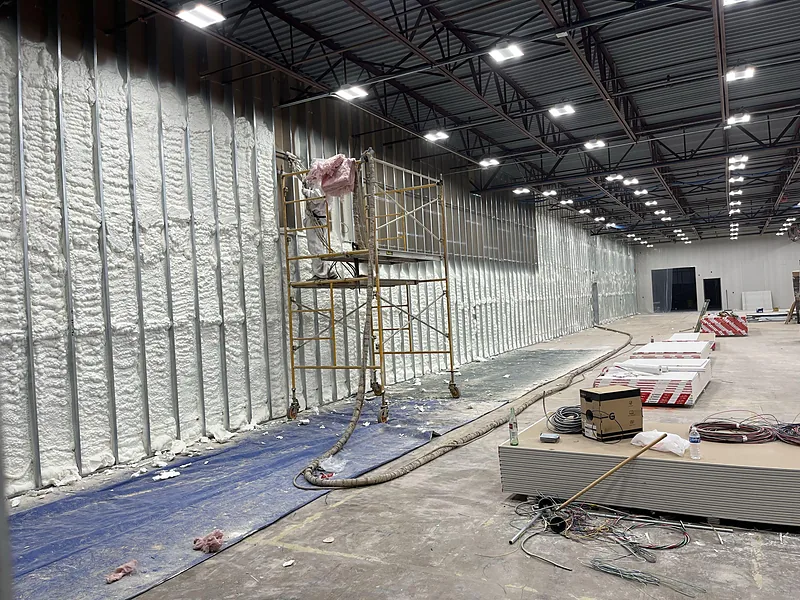
Commercial spray foam insulation project

Commercial Spray Foam Insulation

Insulating a warehouse, office, retail space or working shop floor has to fit around staff and normal operations, so we phase the work and schedule spraying during off-hours, keeping staff away from active spray zones. A heated hose with 200+ ft reach serves large footprints without moving chemical sets indoors. Closed-cell SPF suits many commercial walls and roofs, and we meet ignition-barrier provisions wherever foam stays exposed.

New-construction spray foam insulation

New-Construction Spray Foam Insulation

New construction leaves a short rough-in window for insulation after mechanical work and before drywall. We schedule new construction insulation within that window and coordinate with framing, plumbing, electrical and HVAC inspections. Crews seal the penetrations and framing transitions that decide the blower-door result, often working against the 3 ACH50 target in modern energy codes, or three full air changes of the house per hour under test pressure. Completing those details before interior finishes cover the assembly supports a first-pass test.

Metal building spray foam insulation

Metal Building Spray Foam Insulation

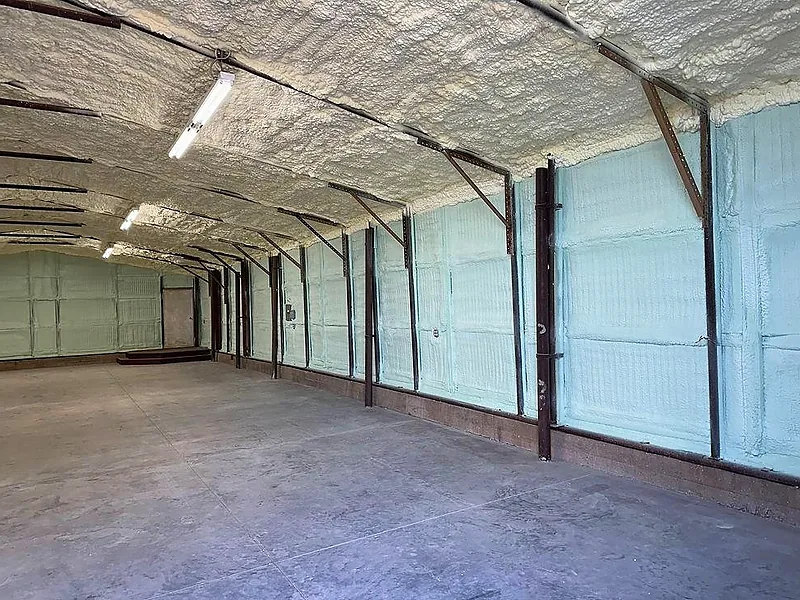
Metal building insulation must control panel-face condensation before drips reach your tools, vehicles or stored goods. Closed-cell SPF bonds directly to properly prepared steel and separates humid indoor air from the cold panel face. We maintain coverage around purlins and girts, the horizontal framing that the panels attach to, because thin spots often develop there. A 1.5 to 3 in application range is typical on steel, while fully conditioned buildings can require greater depth.

Barndominium spray foam insulation

Barndominium Spray Foam Insulation

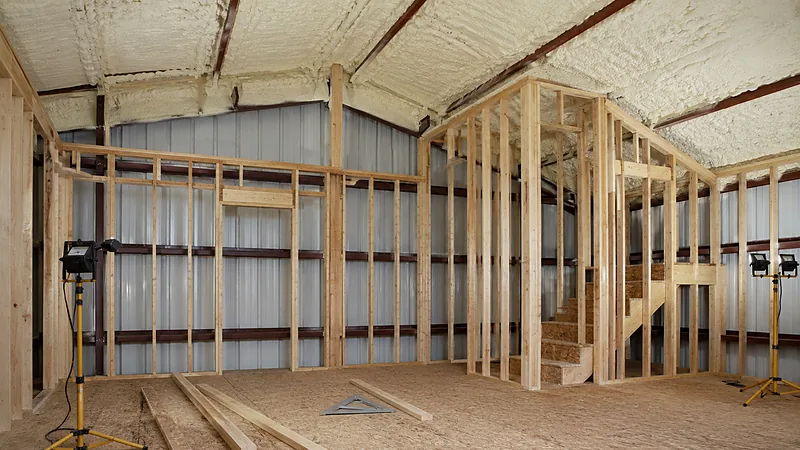
Living quarters and a working shop need different conditions even when they share one barndominium shell. We plan the envelope in two zones, giving the conditioned home a complete thermal boundary and the shop a semi-conditioned assembly suited to equipment and storage. We also detail the partition for sound and fume separation. Before interior framing closes access, we spray the exterior shell to cover panel seams, roof transitions and structural connections.

Pole barn spray foam insulation

Pole Barn Spray Foam Insulation

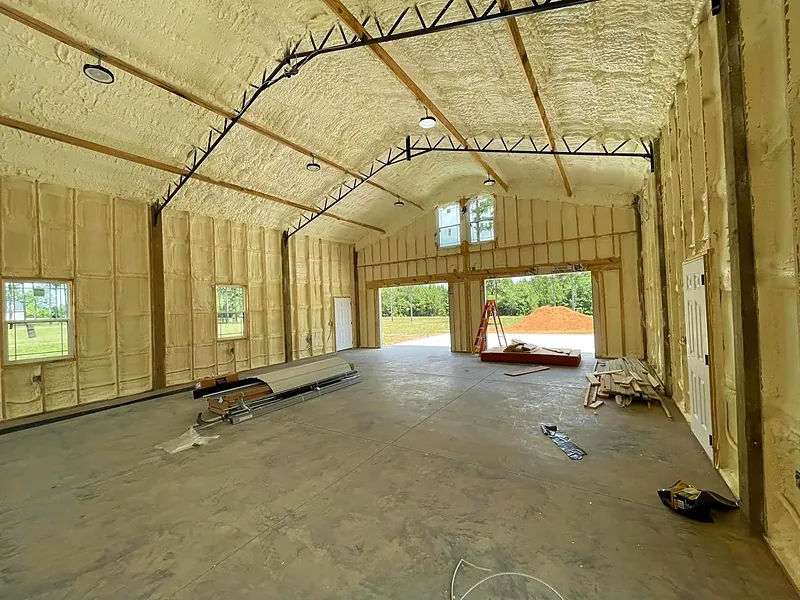
If your pole barn uses post-frame construction, its purlins and girts are spaced on wider centers than house framing, so pole barn insulation has to span bigger bays. Fiberglass can sag at 24-in-plus framing centers, while foam adheres to the building skin between structural members. Closed-cell SPF works well on bare steel for condensation drip control. Open-cell foam can suit lined walls or roof assemblies where cavity depth and budget favor it.

Residential spray foam insulation

Residential Spray Foam Insulation

Heat rarely escapes through just one part of a home, so insulating a single area can leave other leaks and weak spots untouched. Residential insulation here means treating the home as one connected envelope. A whole-envelope retrofit package combines the attic, rim joists and accessible exterior walls in one scheduled project, and most projects fit a 1 to 3 day window. Handling the major leaks and weak spots together helps rooms hold their set temperature longer, so the HVAC cycles less in extreme weather.

Roof deck spray foam insulation

Roof Deck Spray Foam Insulation

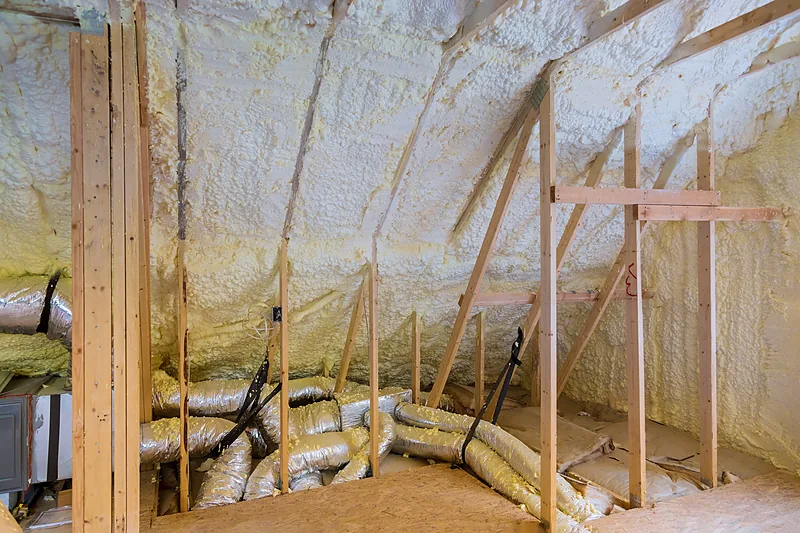
Ductwork in a very hot or cold attic can make it harder to maintain the temperature inside your home. Roof insulation moves the thermal boundary from the attic floor to the roofline, creating an unvented conditioned attic that keeps the ducts inside the envelope and away from extreme roof-space temperatures. Open-cell SPF commonly fills 6 to 10 in of roof-deck depth. We reserve the roof-deck approach for attics that benefit from conditioned space, especially those containing mechanical equipment.

Attic spray foam insulation

Attic Spray Foam Insulation

Gaps around top plates, chases and can-light openings can let conditioned air escape through a vented attic even after the insulation reaches its full depth. Before the field receives its full coverage, we seal those penetrations, set soffit baffles in every rafter bay to preserve intake airflow and dam the attic hatch. We then insulate to the depth Jefferson City’s currently adopted code calls for.

Wall spray foam insulation

Wall Spray Foam Insulation

Remodels, additions and new work provide the most practical time to install wall insulation because the framing is still open. We fill standard 3.5-in and 5.5-in stud cavities, then trim the cured foam flush so drywall lies flat. We also detail boxes and penetrations so devices and service access remain clear. Existing closed walls generally take dense-pack insulation instead.

Spray Foam vs. Fiberglass, Cellulose & Mineral Wool

Insulation has to fit your building and planned work. We install spray foam and conventional insulation, so the recommendation follows the building rather than a product line.

How We Choose the Right Insulation

Eight factors determine which insulation fits your project. Four concern the building, including the location, existing construction, moisture conditions and access. The other four concern the project, including the budget, required R-value, air-sealing need, and whether the work is new construction or a retrofit. Damp crawl space walls usually take foam, while a dry, vented attic on a limited budget suits blown-in insulation. Closed, finished walls go to dense-pack.

Where Conventional Materials Fit

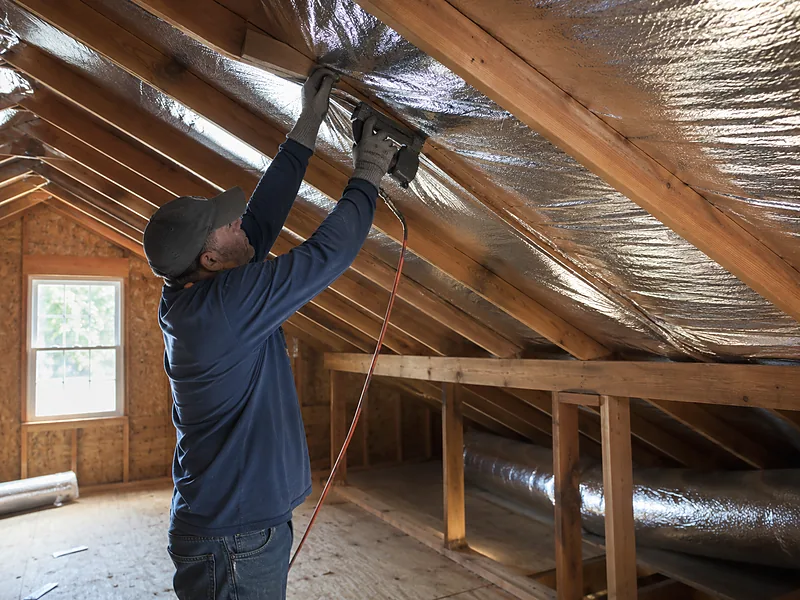
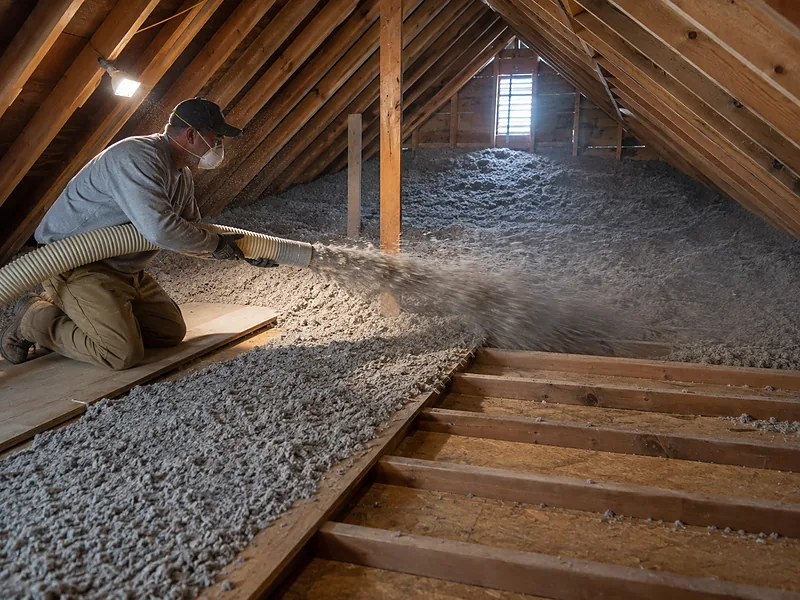
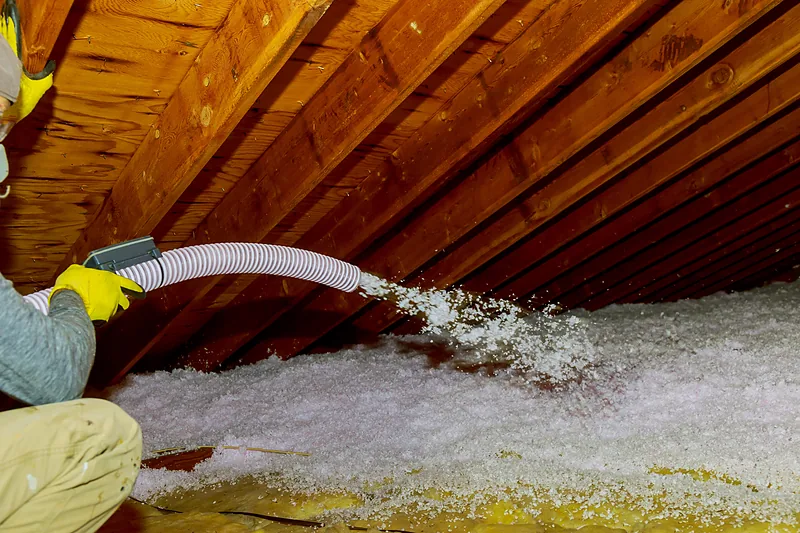
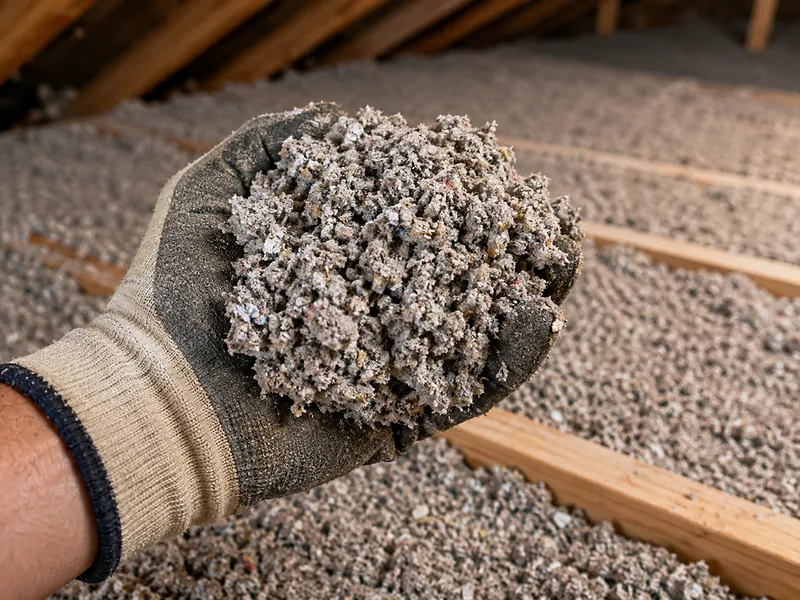
Blown-in insulation covers open attic floors quickly and evenly, but the right material depends on what you need from the assembly. Cellulose is recycled fiber that packs densely. Fiberglass is the practical budget option for standard cavities, while mineral wool adds fire resistance and sound control. When the spray foam vs fiberglass question comes up, the assembly decides it.

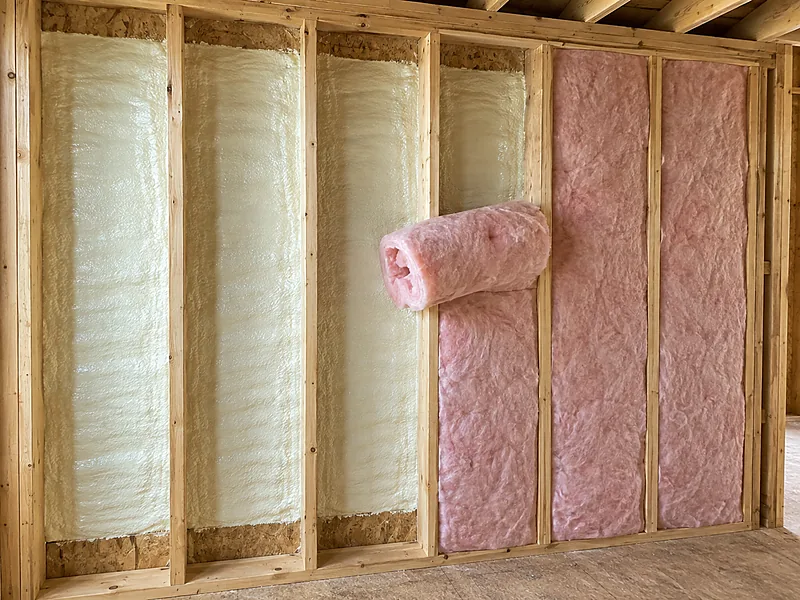
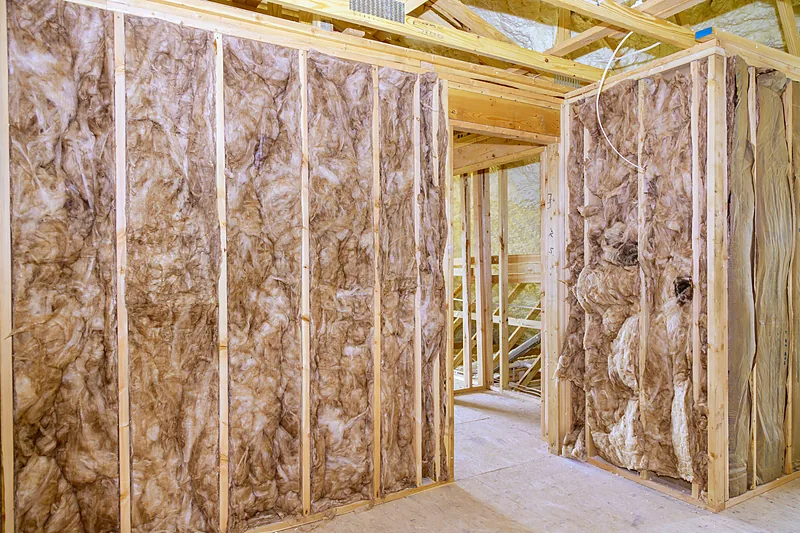
Spray foam and fiberglass batt insulation side by side in a framed wall

Conventional Insulation We Install

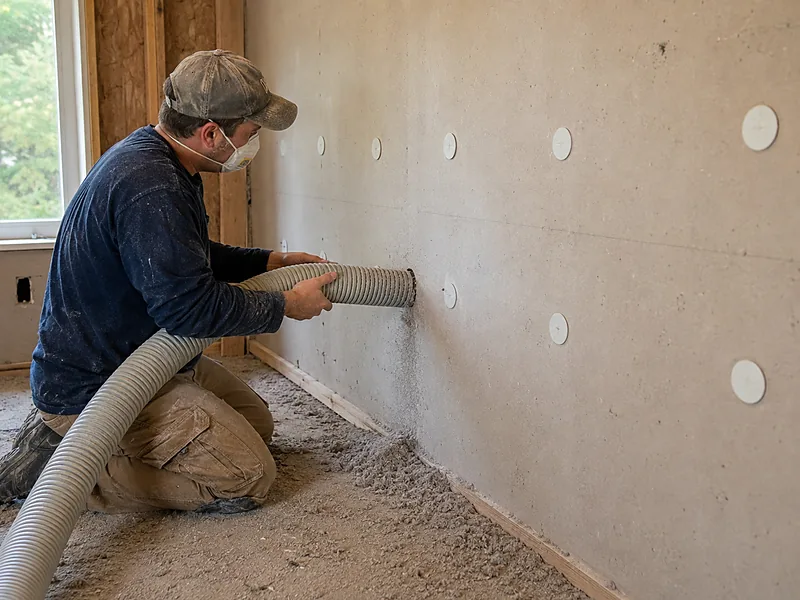
Dense-pack cellulose blown into a closed wall through drilled holes

Dense-Pack Cellulose Insulation

Many older Jefferson City homes still have completely empty wall cavities, and you can gain warmer, quieter rooms without tearing out the drywall. Dense-pack cellulose is the retrofit built for exactly that situation. We drill small, patchable openings and fill each cavity to a 3.5 lb/cu ft density target, packing the material too tightly to settle while leaving the drywall in place.

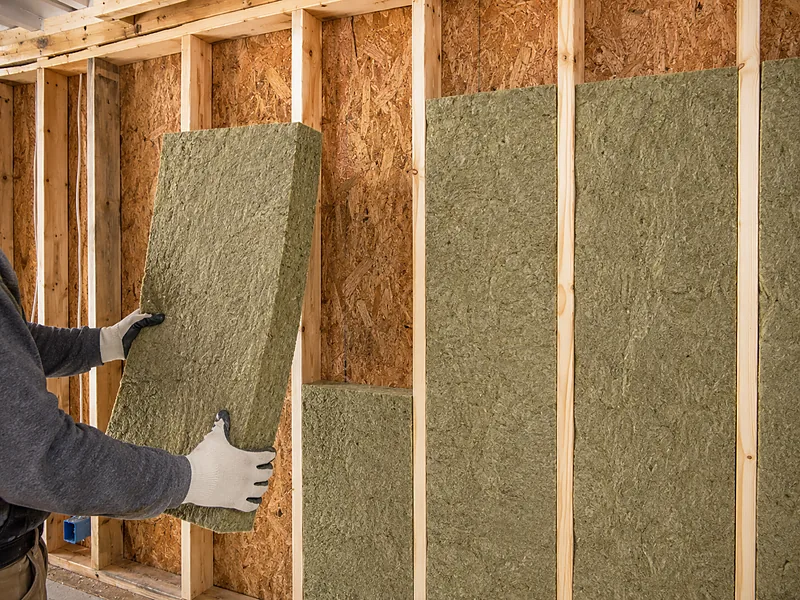
Mineral wool batts friction-fit into a framed wall

Mineral Wool Insulation

When a wall needs a fire rating or stronger sound blocking, mineral wool can justify its higher cost per square foot compared with fiberglass. The batt is non-combustible, has a melt threshold near 2,000°F, is dense enough to block noise and sheds water rather than absorbing it. We specify mineral wool in party walls, mechanical rooms and rooms above garages.

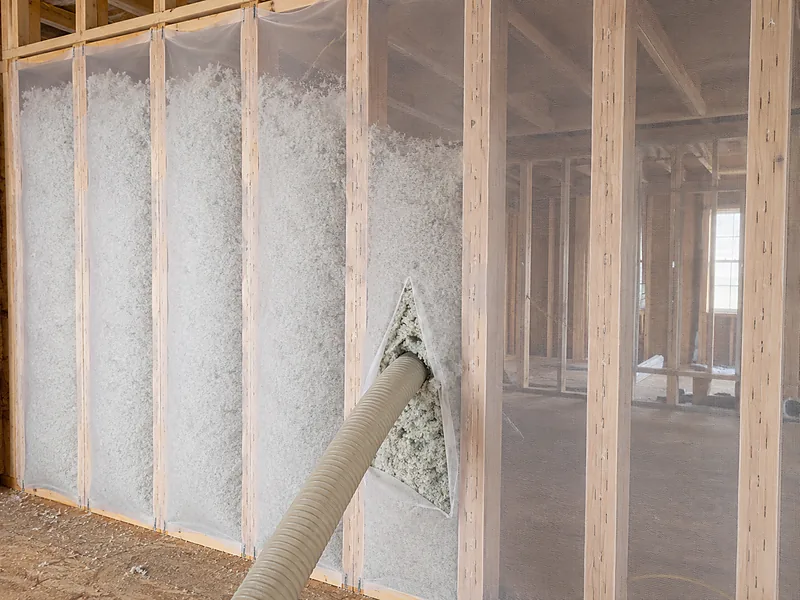
Blower hose filling netted wall bays with insulation

Net & Blow Insulation

For consistent coverage in new walls, every bay needs to be filled around wiring and boxes, including odd-width and out-of-square bays. We staple netting over the open framing and blow fiberglass or cellulose to the specified density. The fill flows around those obstructions and fills each bay completely, and we verify every bay is full before the drywall goes up.

Spray Foam Insulation Cost Factors in Jefferson City

Your spray foam insulation cost depends on how much foam the building actually needs, not floor area alone. Installers measure that amount in board feet. One board foot is 1 sq ft of area covered 1 in deep. Because floor area cannot account for the required depth throughout the building, the final quote is built from field measurements.

What Moves the Price

Two projects with the same floor area can have different prices because the foam, required depth and working conditions all affect the job. Foam type moves the price most, since closed-cell costs more per board foot than open-cell. The target R-value determines the required depth and how many board feet the project uses. Total area, tight access and overhead work affect labor, while old-insulation removal, masking and containment add preparation time. If the foam remains exposed, it may require a thermal or ignition barrier coating. Small projects can also have a mobilization minimum to bring the spray rig and crew to the site.
Typical Ranges

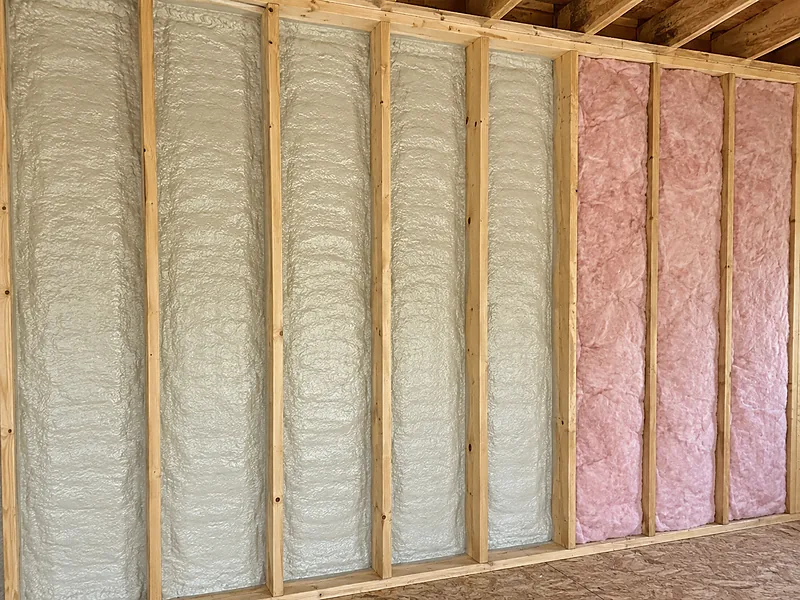
Published Jefferson City prices can give you a starting point, but the on-site estimate sets the actual price. HomeBlue, a pricing guide built from contractor-reported figures, puts typical open-cell work at $0.60 to $0.90 per board foot and closed-cell at $1.00 to $1.50. Reported project totals for 1,000 sq ft at 3 inches run $1,800 to $2,600 for open-cell and $2,900 to $4,400 for closed-cell. Those totals come from completed jobs; yours will vary with depth, prep and access. A financing option is available for qualifying projects.
Estimator walking through an unfinished interior with a homeowner

Our Process: From First Call to Final Walkthrough

Whether the job involves a rim joist or a warehouse, Jefferson City Spray Foam Insulation follows the same five-step sequence. You know what to expect, what the quote includes and which records you will receive when the work is complete.

  1. 1.

    Call or Send the Form

    When you contact us, tell us what you have noticed and how we can access the area. We schedule most free on-site estimate appointments within a week and confirm the visit with you.

  2. 2.

    Walkthrough and Measurements

    To base the quote on the actual work, we measure each spray area and inspect the existing material and access. The estimator also puts a moisture meter on framing and sheathing; wood has to read at or below about 19%, the manufacturer's spec, before foam can bond to it.

  3. 3.

    A Written Scope and Price

    Before you approve the work, your written scope names the foam type, installed thickness, preparation and any barrier coating, so you can see exactly what the price covers. At the same meeting, we explain the available financing.

  4. 4.

    Prep and Spray Day

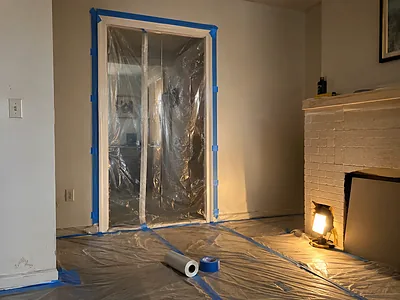
    Before spraying begins, we mask the zone and keep occupants and pets out. Mechanical ventilation runs during spraying and afterward while the foam cures. We set the re-entry window with you before spray day, so you know when the area can be used again.

  5. 5.

    Walkthrough and Records

    At closeout, you can review the finished work and keep records of the installed thickness. We trim excess foam, clean the area and spot-check sprayed depths with you, gauge in hand. The per-area thickness records go home with you for inspections, utility files and future property questions.

Start step one with a call to (573) 455-4421 or send the quote form.

Call Now: (573) 455-4421

About Jefferson City, Missouri

Jefferson City is Missouri’s capital city, where the Missouri State Capitol rises above the Missouri River and state government is the largest employer. The city is also home to Central Bancompany’s headquarters and Scholastic’s national distribution center. Lincoln University, the Missouri Governor’s Mansion and the Missouri State Penitentiary site reflect different parts of the city’s history. About 150,000 residents live in the wider metro area, and Columbia lies 29 miles north.

Homes near Old Munichburg include older brick and frame construction, while other neighborhoods run to post-war ranches and new subdivisions. Each needs a different insulation answer. Missouri River valley humidity brings sticky summers, while hard winter snaps expose air leaks around attics, rim joists and crawl spaces. About 43.6 inches of precipitation a year keeps moisture pressure on crawl spaces and metal buildings, and record temperatures from 114°F to −25°F show how hard local assemblies work. Before recommending open-cell, closed-cell or conventional insulation, a spray foam insulation company must account for your building’s age, materials and drying path.

Areas Jefferson City Spray Foam Insulation Serves

For properties outside the city, Jefferson City Spray Foam Insulation serves these towns around Jefferson City on both sides of the Missouri River.

  • Holts Summit, MO
  • Wardsville, MO
  • California, MO
  • Ashland, MO
  • Linn, MO
  • New Bloomfield, MO
  • Taos, MO
  • St. Martins, MO
  • Russellville, MO
  • Westphalia, MO
  • Eldon, MO
  • Kingdom City, MO
  • Mokane, MO
  • Centertown, MO
  • Hartsburg, MO

Jefferson City Neighborhoods We Serve

Inside the city itself, we insulate homes across Jefferson City's neighborhoods, including the following.

  • Downtown Jefferson City
  • Old Munichburg
  • Southside
  • Moreau Drive
  • Country Club Estates
  • Monticello Acres
  • Schellridge
  • Whitney Woods
  • Emerald Ridge
  • Apache Flats
  • Eastland
  • Boonville Heights
  • Quail Valley
  • Hobbs Woods
  • Signature Ridge

What Mid-Missouri Property Owners Say

Jefferson City Spray Foam Insulation FAQs

How Much Does Spray Foam Insulation Cost in Jefferson City?

Pricing runs by the board foot, one square foot at one inch thick, so garage and whole-home spray foam insulation cost moves with sprayed area and depth rather than floor area. Estimates are free; financing is available.

What’s the Difference Between Open-Cell and Closed-Cell Foam?

Closed-cell foam is dense, moisture-tolerant and rigid, fitting damp or structural needs. Open-cell foam is soft, vapor-open and economical at greater depth. Hybrid flash-and-batt pairs a closed-cell air seal with a lower-cost fill in one wall.

How Long Do We Stay Out of the House After Spraying?

The required re-entry period depends on the spray foam product, ventilation and project conditions. We review the manufacturer's requirements with you before installation so you know when the space can be safely reoccupied.

Does Spray Foam Affect Home Insurance or Resale?

Spray foam can prompt questions from an insurer or future buyer. At the walkthrough, we provide product data plus thickness and coverage records, giving you clear documentation for those conversations.

Is Spray Foam Better Than Blown-In Insulation?

Spray foam handles air sealing and moisture-sensitive assemblies well. Blown-in loose fill often costs less in a dry, vented attic. We install both and recommend the material that fits the assembly.

Do You Remove Old Insulation First?

We remove insulation when it is wet, pest-fouled or blocks the new work. Sound, dry material can remain. Removal, when needed, is priced in the written scope.

Is a Garage Worth Spray Foaming?

An attached garage below a bonus room often delivers the clearest comfort gain. A detached shop benefits when you heat or cool it. Exposed foam may also require a code-compliant covering.

Are You Insured, and Do You Provide Free Estimates?

Yes. Jefferson City Spray Foam Insulation is insured and provides free on-site estimates. You receive a written scope explaining the proposed insulation work before deciding whether to proceed.

Get a Free Spray Foam Insulation Estimate in Jefferson City

Schedule your free on-site estimate with Jefferson City Spray Foam Insulation. We look at the building, take field measurements and record moisture readings where conditions call for them, then prepare a written scope with price.